
The 5 Best Surf Camps for Intermediate Surfers
You have the basics down, but you’re chasing that feeling of flow—the one where you and the wave move together in perfect sync. That connection can feel elusive, requiring a combination of technique, confidence, and ocean knowledge that’s difficult to build on your own during weekend sessions. You’re ready for a breakthrough, but you need the right guidance to get there. A dedicated surf camp can be the catalyst for that leap forward. We’ll walk you through the key components, like 1:1 coaching and video analysis, that separate the good from the great, helping you find the best surf camps for intermediate surfers.
Key Takeaways
- Choose coaching that gets specific: To break through an intermediate plateau, you need targeted feedback. Look for camps that offer low student-to-coach ratios, video analysis, and a structured program designed to refine your technique.
- Match the waves and vibe to your goals: The right environment is crucial for progress. Seek out camps with consistent, manageable waves (like a mellow point break) and an atmosphere where you'll thrive, whether that’s a quiet wellness retreat or a social surf house.
- Look beyond the surf for a complete experience: Your performance in the water is directly linked to your recovery on land. Prioritize camps that invest in high-quality gear, provide nourishing food, and include wellness practices like yoga to keep you strong and prevent injury.
What to Look For in an Intermediate Surf Camp
Once you’ve moved beyond the whitewater, finding the right surf camp becomes less about just standing up and more about refining your skills. You’re not a beginner anymore, but you’re not quite a pro either. This is where the right environment can make all the difference, helping you break through plateaus and build real confidence in the water. The best intermediate surf camps aren’t one-size-fits-all; they offer a specific blend of coaching, wave quality, and atmosphere. When you start your search, focus on these four key areas to find a camp that will truly help you progress.
Prioritize Personalized, Expert Coaching
At the intermediate stage, generic advice won’t cut it. You need a coach who can spot the subtle tweaks you need to make, whether it’s your bottom turn, body positioning, or timing. Look for camps that offer a low guest-to-coach ratio, ideally 1:1 or in very small groups. This ensures you get the focused feedback necessary to improve. A great program will often include video analysis, allowing you to see exactly what you’re doing right and wrong. This kind of personalized coaching is designed to accelerate your learning curve, making your time in the water more productive and fun.
Find the Right Waves for Your Level
The perfect wave for an intermediate surfer is one that offers a challenge without being overwhelming. You want a spot with consistent, predictable waves, typically in the 3- to 5-foot range. This size is ideal for practicing maneuvers and getting longer rides without the intensity of heavy, powerful surf. Point breaks or mellow beach breaks are often perfect for this. Before booking, research the typical surf conditions for the time of year you plan to visit. A camp that has access to a variety of breaks is a huge plus, as the coaches can take you to the best spot based on the daily forecast and your specific goals.
Choose a Vibe That Fits You
The overall atmosphere of a surf camp can make or break your trip. Are you looking for a social, party-centric vibe, or a quiet, wellness-focused retreat? Be honest with yourself about the kind of environment you’ll thrive in. Some camps are all about pushing your limits in a high-energy group setting, while others create a more relaxed space where you can connect with fellow surfers and focus on your personal growth. Reading reviews and looking at a camp’s social media can give you a good sense of the community and whether it aligns with your personality and what you want from your vacation.
Consider Your Comfort and Amenities
Surfing is physically demanding, and having a comfortable place to rest and recharge is essential. Think about what you need to feel your best. For some, that’s a simple, clean room, while for others, it’s a touch of luxury. Look at the accommodations, the quality of the food, and any other amenities offered. A camp that provides nourishing, chef-prepared meals and a serene resort environment can help you recover faster and get the most out of every session. After all, this is your vacation—you should enjoy your time out of the water just as much as your time in it.
My Top Picks: The Best Surf Camps for Intermediates
After countless hours of research and a few salty adventures of my own, I’ve narrowed down the best surf camps that truly cater to the intermediate surfer. This is that tricky stage where you’ve mastered the basics but need the right guidance and waves to really start carving, turning, and building confidence. My picks cover a range of styles and budgets, from a five-star wellness retreat to a no-frills camp focused purely on wave count.
Each of these camps excels in different areas. Some offer world-class, technical coaching with video analysis, while others provide a more holistic experience that supports your surfing from the inside out. What they all have in common is access to incredible waves perfect for progression and a proven track record of helping intermediate surfers break through to the next level. Whether you’re looking to refine your technique on a perfect point break or simply connect with other surfers in a beautiful setting, you’ll find a great fit on this list.
Surf Synergy, Costa Rica: The Ultimate in Luxury and Wellness
If your idea of a perfect surf trip involves not just incredible waves but also deep restoration, Surf Synergy is the place for you. This isn't your typical surf camp; it's a luxury wellness resort where personalized surf coaching is just one piece of the puzzle. The experience is designed to strengthen your mind and body to support your progress in the water. You’ll get 1:1 instruction tailored to your goals, but you’ll also participate in daily yoga, breathwork, and functional movement classes. Plus, the chef-prepared, farm-to-table meals are absolutely incredible. It’s the perfect choice if you want to improve your surfing in a supportive, rejuvenating, and truly beautiful all-inclusive environment.
Barefoot Surf Travel: Excellence in Personalized Coaching
Barefoot Surf Travel has built a stellar reputation for one simple reason: its coaching is exceptional. They are laser-focused on helping you improve as quickly and efficiently as possible. The small group sizes ensure you get plenty of individual attention, and the instructors are experts at breaking down complex techniques into simple, actionable steps. Many of their packages include video analysis, so you can see exactly what you need to work on. If your primary goal is to leave a significantly better surfer than you were when you arrived, Barefoot’s coaching retreats are a fantastic option. The glowing reviews say it all—people leave feeling more confident and skilled in the water.
Lapoint Surf Camps: Structured Programs for Progression
For surfers who thrive on structure and clear goals, Lapoint is an excellent choice. They offer a well-defined curriculum that takes the guesswork out of getting better. Their Level 3 intermediate course is specifically designed to help you become a more independent and confident surfer, capable of handling more challenging conditions. The program is a mix of hands-on practice in the water and theory sessions on land, covering everything from wave selection to surf etiquette. They also use video coaching to provide specific, individual feedback. It’s a systematic approach that delivers consistent results, making it ideal for the analytical surfer who loves a good plan.
Salina Cruz Surf Camps, Mexico: A Paradise of Consistent Waves
If your dream surf trip is all about maximizing your time in the water, look no further than Salina Cruz. This region in Oaxaca, Mexico, is famous for its seemingly endless right-hand point breaks that are practically made for intermediate surfers. The waves are consistent, forgiving, and long, giving you the perfect canvas to practice your turns and build your flow. While the accommodations are often more rustic than resort-style, the trade-off is access to some of the least crowded waves in Mexico. This is the spot for surfers who are happy to skip the frills in exchange for unforgettable sessions and a serious wave count.
Nicaragua Surf Camps: Diverse Breaks for Every Budget
Nicaragua is a surfer’s playground, offering an incredible variety of waves without the hefty price tag of other destinations. Known for its consistent offshore winds, the country serves up clean, fun conditions almost year-round. For intermediate surfers, the real draw is the diversity of breaks—from mellow beach breaks to more challenging reefs and points. This allows you to test your skills in different environments and find what suits your style. Whether you’re looking for a social surf hostel or a quiet eco-lodge, you can find a Nicaraguan surf camp that fits your vibe and budget, all while enjoying warm water and friendly local culture.
Breaking Down the Cost of a Surf Camp
Surf camps come in all shapes and sizes, and so do their price tags. Understanding what you’re paying for is the first step in finding the right fit for your goals and budget. The cost often reflects the level of personalization, accommodation quality, and the range of amenities included. Let's look at what you can generally expect at different price points.
Budget-Friendly Stays ($1,500-$3,000)
If you're focused purely on getting in the water and don't need a lot of frills, a budget-friendly camp can be a great choice. These options are perfect for surfers who are comfortable with more basic accommodations, like shared dorms or simple rooms, and are happy with a more hands-off approach. You’ll get your surf lessons and board rental, but meals and other activities might be extra. As one camp notes, prices can start as low as $485 for a five-day camp. This tier is a solid way to improve your skills without a huge financial commitment.
Mid-Range Experiences ($3,000-$6,000)
This is the sweet spot for many intermediate surfers. Mid-range camps typically offer a more comprehensive package, bundling comfortable private or semi-private accommodations, most meals, and a structured surf program. You can expect more personalized coaching and a better guide-to-guest ratio than budget options. One popular retreat advertises that with prices starting at $2,500 per week, they offer "killer value for everything that's included." This price range delivers a well-rounded experience that balances quality coaching, comfort, and cost, allowing you to focus completely on your surfing.
All-Inclusive Luxury ($6,000-$10,000+)
For those who want a truly transformative getaway, a luxury surf camp is the ultimate investment in yourself. These retreats combine world-class surf coaching with high-end accommodations, gourmet cuisine, and holistic wellness programs. Think private rooms with ocean views, chef-prepared meals, and personalized itineraries that might include yoga, spa treatments, and video analysis. While the price is higher—some exclusive experiences like the Surf Ranch can average around $6,000 per person—the value is in the details. At Surf Synergy, our all-inclusive experience is designed so you don’t have to think about a thing except catching your next wave.
What Your Money Actually Gets You
It’s helpful to see where your money is going. A typical week-long surf camp package often bundles the big-ticket items. One camp breaks down the value, showing that things like surf lessons, board rentals, and transport are usually included. However, they also note that meals may only be partially included. This is a key difference to look for. An all-inclusive resort handles everything from your daily coaching and gear to the delicious, nourishing food you need to replenish your energy. When comparing costs, look beyond the sticker price and consider the total value of what’s included to find the best fit for your trip.
Understanding Different Coaching Styles
The right coaching can be the difference between feeling stuck and breaking through an intermediate plateau. As you move beyond the basics, you need more than generic instruction—you need to refine your technique and learn to read waves with confidence. The best surf camps offer specialized coaching with a clear philosophy. Finding a program that fits your learning style is key to becoming an independent surfer, which is the focus of the Surf Synergy experience.
Get Technical with Video Analysis
Video analysis is a game-changer for intermediates. It’s nearly impossible to see your own mistakes on a wave, but watching a replay provides instant, objective feedback. A coach will film your sessions and review them with you, breaking down your form from pop-up to turns. This detailed feedback helps you correct bad habits and make small adjustments that lead to huge improvements. It’s one of the fastest ways to progress.
Decide Between Group and Private Lessons
Intermediates benefit from more focused sessions than typical group lessons. A low student-to-coach ratio is key, but the gold standard is a program built around 1:1 instruction. This allows your coach to focus exclusively on your goals, whether it's generating speed or perfecting a cutback. You get instant, tailored feedback without waiting your turn, making it an incredibly efficient way to improve your surfing.
Follow a Structured Skill-Building Program
Look for a camp with a structured curriculum, not just random surf sessions. The best programs ensure each lesson builds on the last, creating a clear path for your progression. This approach helps you become a well-rounded surfer, focusing on everything from paddle power and wave selection to surf etiquette. You’ll leave with the confidence and knowledge to handle more challenging conditions on your own.
Learn to Read the Ocean
Surfing is as much about ocean knowledge as it is about riding waves. Progressing as an intermediate means learning to read the water with confidence. This goes beyond spotting a good wave; it’s about understanding how tides, currents, and swell direction affect the break. A great coach teaches you where to sit in the lineup and how to predict waves, giving you the skills to be a safe and independent surfer anywhere.
What Are the Ideal Waves for Intermediate Surfers?
As an intermediate surfer, you’ve graduated from the whitewater and are now focused on progression. You’re not just catching waves; you’re learning to ride them with more style and control. The right wave is your best teacher, offering a canvas to practice bottom turns, generate speed, and start linking maneuvers. The ideal wave for you is predictable enough to read but challenging enough to push your boundaries without being overwhelming. It should have a clean, open face that gives you the time and space to think through your next move, rather than just surviving the drop.
Finding a surf camp that offers consistent access to these types of waves is one of the most important factors in your decision. You want a program that understands the nuances of progression and doesn't just throw you into the closest break. At a place like Surf Synergy, the focus is on matching you with the perfect conditions for your skill level each day, ensuring every session is a productive one. The goal is to find that sweet spot where you feel both confident and challenged, allowing you to build muscle memory and refine your technique. Forget fighting chaotic closeouts or shoulder-hopping in crowded lineups; your focus should be on finding peeling waves that let you truly work on your surfing.
Aim for Powerful 2-5 Foot Waves
When we talk about wave size, we’re generally looking at the height of the wave face. For an intermediate surfer, the sweet spot is typically in the 2-to-5-foot range, or about waist-to-head-high. You’re likely already comfortable handling 2-to-3-foot waves, where you can confidently practice your turns. The next step is pushing into slightly larger 3-to-5-foot waves, which carry more power and offer a steeper face for more critical maneuvers. This size is perfect because it gives you a real push without the intimidating consequences of bigger surf, allowing you to build confidence and experiment with more advanced techniques.
Practice on Consistent Point Breaks
Point breaks are a dream for intermediate surfers. These are waves that break along a piece of land, like a rocky point or headland, creating a long, organized, and highly predictable wave. Because the wave peels in the same way almost every time, you can stop worrying about where to be and start focusing on how you’re surfing. This consistency is invaluable for practicing your timing, linking turns, and maintaining speed down the line. The best point breaks for intermediates catch enough swell to offer those perfect 3-to-5-foot waves consistently, giving you plenty of opportunities to dial in your skills on a long, beautiful ride.
Build Versatility on Beach Breaks
While point breaks are perfect for repetition, beach breaks are where you learn to become a more adaptable and well-rounded surfer. These waves break over a sand bottom, meaning the peaks can shift and change with the tide and swell. This forces you to improve one of the most critical skills in surfing: reading the ocean. Surfing a beach break teaches you to identify the best takeoff spots, anticipate sections, and react to an ever-changing environment. For practice, look for mellow conditions—think 1-to-3-foot waves with a light offshore wind to hold up the face. This variety will make you a smarter, more capable surfer no matter where you travel.
Which Accommodation Fits Your Travel Style?
The place you rest your head at night is just as important as the waves you catch during the day. Your accommodation sets the tone for your entire trip, influencing everything from your energy levels to the people you meet. Surf camps have evolved far beyond basic beach shacks. Now, you can find a spot that perfectly matches your travel style, whether you’re looking for five-star comfort, a vibrant social scene, or a sustainable escape. Thinking about what kind of environment helps you thrive will ensure your surf trip is restorative both in and out of the water. Let’s look at three popular options to help you decide which is the right fit for you.
Indulge in a Luxury Resort
If your idea of a perfect surf trip includes plush bedding, chef-prepared meals, and high-end amenities, a luxury resort is your answer. This option is for the traveler who wants to focus completely on their surfing without sweating the small stuff. These days, you can find truly luxurious options that blend expert surf coaching with the comforts of a boutique hotel. Imagine spending your day in the water, pushing your limits, and then returning to a tranquil space designed for total relaxation and recovery. This style allows you to recharge fully between sessions, ensuring you’re always ready to paddle out. It’s the best way to pair serious surf progression with some well-deserved pampering.
Connect in a Community Surf House
For those who thrive on shared energy and new friendships, a community-focused surf house is the way to go. This style is all about connection—sharing stories over dinner, cheering each other on in the lineup, and learning alongside people who are just as passionate about surfing as you are. The best community-style camps create a supportive and personal atmosphere where you feel like part of a family. As one guest shared, the sense of community can leave a lasting impression. When you’re surrounded by like-minded travelers and encouraging instructors, you’ll find your confidence grows faster and you’ll leave with memories that extend far beyond the waves.
Go Green with an Eco-Lodge
If you’re a traveler who wants to minimize your environmental footprint, an eco-lodge offers a sustainable way to experience paradise. These accommodations are built with a deep respect for the natural surroundings, often incorporating local materials, renewable energy, and conservation practices. But going green doesn’t mean roughing it. Many eco-lodges provide incredible comfort, with rooms designed to be a perfect retreat after a long day of adventure. Choosing an eco-lodge means your trip supports the local environment and community. It’s a great fit for anyone who believes in a holistic approach to travel, where personal well-being and the planet’s health go hand in hand.
How Long Should Your Surf Trip Be?
Deciding on the length of your surf trip is a big piece of the puzzle. The right amount of time allows you to settle in, make real progress, and return home feeling accomplished, not rushed. While a quick weekend getaway is always fun, for an intermediate surfer looking to improve, you’ll want to give yourself a bit more time to really soak it all in. The ideal duration really comes down to your personal goals, your schedule, and what you hope to get out of the experience.
Go for a Week-Long Intensive (5-7 Days)
For many of us, a week is the sweet spot. A 5-to-7-day trip gives you enough time to disconnect from your daily routine and fully immerse yourself in surfing. This is the most popular length for a reason—it’s long enough to break old habits, build new muscle memory with daily coaching, and see a noticeable improvement in your skills. Most surf camps, especially in places like Costa Rica, are structured around a week-long stay. At Surf Synergy, our all-inclusive packages are designed to maximize your progress over seven days, giving you the perfect blend of intensive coaching, wellness, and relaxation.
Commit to an Extended Retreat (10+ Days)
If you have the time and are serious about making a significant leap in your surfing, a longer retreat of 10 days or more can be a game-changer. Some of the world's best surf destinations, like the Mentawais, offer 10-day trips that allow for a much deeper dive. The extra days give you more time to practice in different conditions, solidify new techniques, and let your body adapt. This extended timeframe moves beyond a simple vacation and becomes a truly transformative experience, allowing you to integrate feedback, build confidence, and make your new skills feel second nature.
Match the Trip Length to Your Goals
Ultimately, the perfect trip length is the one that aligns with your ambitions. If your goal is to refine a specific skill, like perfecting your bottom turn, a focused week might be all you need. But if you're looking to completely overhaul your technique, you'll need more time in the water. Some experts suggest it can take around 80 hours of practice to master intermediate skills. While you won't hit that in one trip, it shows the value of consistent time on the board. Be honest with yourself about what you want to achieve, and choose a duration that sets you up for success.
Beyond the Waves: Wellness to Support Your Surfing
Surfing is so much more than just riding waves. It’s a full-body workout that demands strength, flexibility, and mental focus. The best intermediate surf camps understand this and recognize that your progress in the water is directly tied to how you care for your body on land. A camp that integrates wellness into its program isn't just a fun extra—it's a strategic way to help you surf better, prevent injuries, and get the most out of your trip.
Think about it: paddling requires endurance, pop-ups demand explosive power, and carving a wave takes incredible core stability and balance. If you’re sore, stiff, or mentally drained, you won’t be able to perform your best. That’s why a holistic wellness program that includes strength training, yoga, and recovery is a game-changer. It prepares your body for the demands of surfing and helps you recharge between sessions, so you can show up feeling strong and ready to learn every single day. Choosing a camp with a strong wellness component ensures you’ll leave not just as a better surfer, but feeling completely renewed.
Build Strength with Functional Movement
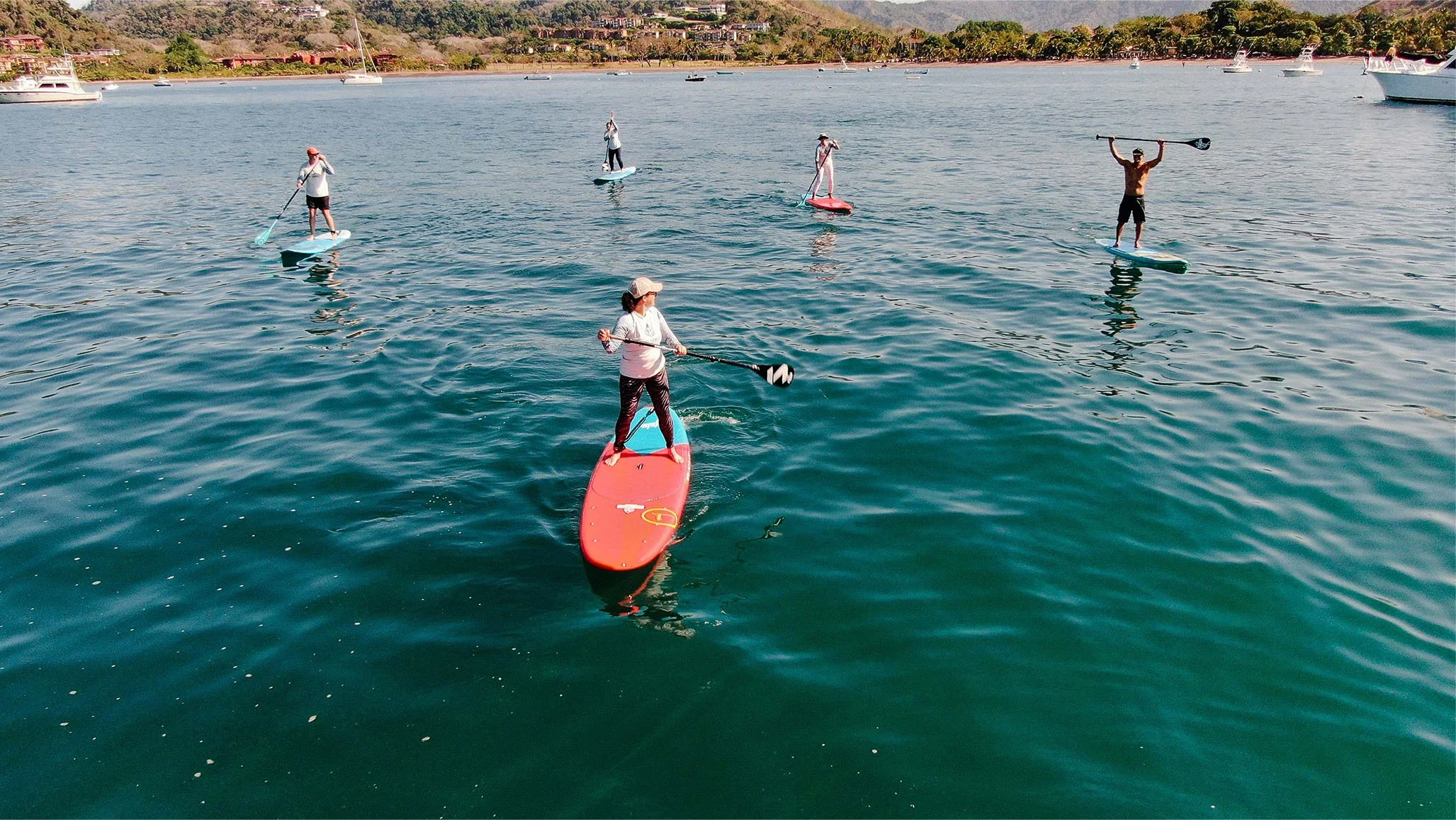
Forget about traditional weightlifting. Surf-specific strength is all about functional movement that mimics the actions you perform on a board. This kind of training builds power and stability in the right places—your core, back, and shoulders—to improve everything from your paddling efficiency to the force of your turns. A great surf camp will incorporate exercises like resistance band training, balance board work, and even stand-up paddleboarding sessions to build practical strength. This approach ensures you’re not just getting stronger, but getting stronger for surfing. It’s the most direct way to translate your efforts in the gym to tangible progress in the ocean.
Find Your Flow with Yoga and Breathwork
Yoga and surfing are a perfect match. A consistent yoga practice builds the core strength, flexibility, and balance you need to feel stable and fluid on your board. It helps open up your hips and shoulders, which can get tight from paddling, making your pop-up quicker and more efficient. Beyond the physical benefits, breathwork is an incredible tool for surfers. Learning to control your breath helps you stay calm and centered, especially when you’re facing a challenging set or taking a wipeout. A holistic experience that includes daily yoga and meditation will not only support your surfing but also help you feel more connected and present during your trip.
Build Confidence with Underwater Training
For many intermediate surfers, taking on bigger waves is more of a mental challenge than a physical one. The fear of being held under can hold you back from committing to waves and pushing your limits. This is where underwater training comes in. Guided sessions in a pool can help you safely practice holding your breath and staying calm under pressure. By simulating a hold-down in a controlled environment, you build the confidence and mental resilience needed in the open ocean. Some camps even offer specialized retreats focused on this, giving you the tools to manage fear and feel safer as you progress into more powerful surf.
Focus on Recovery and Injury Prevention
Surfing multiple days in a row is incredibly demanding on your body. Without proper recovery, you risk muscle fatigue, burnout, and even injury. The top surf camps prioritize rest and rejuvenation just as much as time in the water. This can include guided stretching sessions, professional massages, or simply providing a peaceful environment where you can truly relax. Your accommodations play a huge role in this. A comfortable, quiet room allows for the deep sleep your body needs to repair itself. A well-designed resort becomes your personal sanctuary, ensuring you can recover fully and hit the waves with fresh energy each morning.
What Other Features Make a Difference?
The right coaching and perfect waves are the heart of a great surf trip, but the details surrounding them are what create a truly transformative experience. When you’re investing your time and money, you want more than just good surfing—you want comfort, connection, and nourishment. These seemingly small features add up, ensuring you leave feeling refreshed and inspired, not just tired and sore. From the quality of your board to the food on your plate, paying attention to these elements will make your trip unforgettable.
Check the Quality of Gear and Boards
As an intermediate surfer, you’ve moved beyond the foamie and are starting to understand how different boards perform. The last thing you want is to be stuck with a dinged-up, waterlogged board that holds you back. A top-tier surf camp will have a diverse quiver of high-quality boards for you to try, allowing you to experiment with different shapes and sizes based on the day’s conditions and your specific goals. Having access to well-maintained gear means you can focus entirely on your surfing, not on whether your equipment is up to the task. This is a key part of the overall experience and a sign of a camp that invests in its guests' progression.
Fuel Your Body with Great Food
Surfing burns an incredible amount of energy, and how you refuel matters. After hours in the water, your body needs more than just a basic meal; it needs high-quality, nutrient-dense food to recover and build strength for the next session. Look for camps that prioritize their culinary program. As one guest described our approach, it’s about "excellent surf instruction, amazing food, gorgeous accommodations, and unbeatable service." When a camp offers chef-prepared, farm-to-table meals, it shows a commitment to your holistic well-being. You’ll feel the difference in your energy levels both in and out of the water when you replenish with delicious, healthy cuisine.
Look for Fun Group Activities
A surf trip is as much about the people you meet as the waves you ride. Shared experiences outside of the water are where friendships are forged and memories are made. The best camps foster a sense of community by organizing group activities, whether it’s a sunset yoga session, a family-style dinner, or an excursion to a local waterfall. These moments of connection are what make a trip special. Some camps even host themed retreats throughout the year, combining their core surf programs with unique activities led by special guests. This focus on community ensures you’ll leave with new friends, not just new skills.
Prioritize Access to Different Breaks
Riding the same wave every day can lead to a plateau. To truly advance, you need to challenge yourself in different conditions. A camp with access to a variety of surf breaks—from mellow point breaks to faster beach breaks—gives you the opportunity to become a more versatile and confident surfer. This allows your coaches to find the best possible waves for the day's swell and wind, ensuring you always have an optimal learning environment. Before booking, check what kind of waves are near the resort and ask about their ability to travel to different spots. This variety will keep your sessions exciting and accelerate your progress.
Ready to Book? How to Make Your Final Choice
You’ve explored the options, pictured yourself on the waves, and are so close to booking your dream surf trip. This is the exciting part! Making the final call comes down to matching a camp’s offerings with your personal goals and travel style. Think of it less as finding the "best" camp and more as finding the one that’s the perfect fit for you. To lock in your decision, consider a few final details that will make all the difference between a good trip and a truly transformative one.
Be Honest About Your Current Skill Level
Before you click "book," take a moment for an honest check-in on your surfing abilities. This isn’t about ego—it’s about setting yourself up for success. An intermediate surfer can typically catch their own 2- to 3-foot waves and perform basic bottom turns and cutbacks. If that sounds like you, great. If you’re still working on consistently popping up or feeling confident in the lineup, a camp geared toward advanced beginners might be a better fit. Choosing a program that aligns with your current skills ensures you’ll feel challenged but not overwhelmed. You want instruction that pushes you to the next level, not leaves you struggling to keep up. To get a clear picture, you can accurately assess your skill level with a guide before you commit.
Match the Camp to Your Learning Style
Everyone learns differently, and surf camps have distinct coaching philosophies. Some offer highly structured programs with daily theory and video analysis, while others take a more intuitive, in-the-water approach. Think about what helps you thrive. Do you improve with technical, one-on-one feedback, or do you prefer learning by doing in a small group? Many camps now offer specialized surf coaching retreats designed for focused progression. At Surf Synergy, our 1:1 coaching model means every session is tailored to your specific goals, whether it’s perfecting your cutback or building confidence in bigger waves. Find a camp whose teaching style resonates with you, and you’ll progress much faster while having more fun.
Factor in Travel Logistics and Timing
Finally, let’s get practical. Your ideal surf camp also needs to fit your schedule and travel preferences. The most important factor is timing your trip with the right wave season. You want to be sure you’re showing up when the conditions are best for intermediate surfers. Beyond that, consider the journey itself. How long will it take to get there, and how complex are the travel arrangements? Some remote surf breaks are worth the trek, while others prefer the ease of an all-inclusive resort with seamless airport transfers. Finding a camp that balances serious instruction with the right atmosphere and comfort level will ensure your entire experience is exactly what you’re looking for.
Related Articles
- 5 Tips to Boost Your Surf & SUP Skills — Surf Synergy
- Is Surfing hard? — Surf Synergy
- Power Surf with Rodrigo Machado — Surf Synergy
- Find Your Perfect Wave Near Surf Synergy, Costa Rica — Surf Synergy
- Surf Mobility Routine for Hips & Lower Body — Surf Synergy
Frequently Asked Questions
How do I know if I'm truly ready for an intermediate surf camp? This is a great question. Generally, you're in the intermediate zone if you're comfortable paddling out on your own and can consistently catch waist-to-chest-high green waves. You should be able to pop up with confidence and perform basic turns down the line. It’s less about knowing advanced maneuvers and more about being independent in the water and ready to move beyond just going straight in the whitewater.
Is 1:1 coaching really that much better than group lessons? While group lessons are fantastic for learning the basics, an intermediate plateau often comes from small, specific habits that are hard to spot in a group setting. One-on-one coaching allows an instructor to focus entirely on you, providing instant feedback on your technique, wave selection, and body positioning. It’s an incredibly efficient way to make progress because every piece of advice is tailored to your personal goals.
I'm a bit nervous about traveling alone. Are surf camps a good fit for solo travelers? Absolutely. Surf camps are one of the best ways to travel solo. You’re instantly connected with a group of people who share your passion for the ocean, which takes all the pressure off of trying to meet people. The structured days and group meals create a natural sense of community, and you have a built-in support system both in and out of the water. It’s a safe, fun, and incredibly rewarding way to have an adventure on your own terms.
Do I need to be in amazing shape before I go? You definitely don't need to be a professional athlete, but a good baseline of fitness will help you get the most out of your trip. Surfing is demanding, so being comfortable with swimming and having decent paddle endurance is important. However, the best camps, especially those with a wellness focus, are designed to build your strength and stamina while you're there. They meet you at your current fitness level and help you improve through functional training and proper recovery.
What's the single most important thing to look for when choosing a camp? If I had to pick just one thing, it would be the alignment between the camp’s philosophy and your personal goals. It’s not just about the waves or the coaching in isolation, but how they all come together. Be honest with yourself about what you want: are you looking for a rigorous, technical boot camp, or a holistic experience that supports your surfing through wellness and community? Finding a camp that matches your vibe and learning style is the key to a trip that feels truly successful.
